
An excerpt from my research paper ” Mindset Matters” written 2021.
This research paper details the findings of a four-year study tracking mindsets, pressure & stress, their impact on wellbeing & performance in workplaces across New Zealand.
The findings of this report highlight the urgent need for workplaces, organizations and their leadership to ensure implementation of comprehensive stress risk management and prevention strategies and systems.
Without such our modern workplaces are limiting the performance potential of their people while seriously jeopardizing their health and wellbeing.
As we enter a period of greater economic uncertainty stress related illness, fatigue and burnout will be on the rise. Organizations themselves will only be as resilient as their people.
This requires greater awareness and knowledge of the science of stress and the associated risks.
It will require greater transparency for stress levels within workplaces and organizations.
Without consistent scientific measurement of stress and evaluation of risk reduction strategies, stress and its risks cannot be managed. Compliance with legislated duty of care cannot be fulfilled.
All members of the workplace must be engaged and participating in identifying workplace psychological hazards within team cultures and dynamics.
Global trends are highlighting that simple ignorance of the science of stress and associated health risks will increasingly be viewed as negligence on behalf of organizations and their leaders.
New technologies, such as the teambleu software utilized for the data and research highlighted in this report, make meeting all these requirements, fulfilling this duty of care, more reasonable and practicable than ever before, for any and every workplace.
Methodology
From 2016 to 2020 data was gathered from individuals in workplaces across New Zealand.
All data is anonymous and confidential.
The corporate teams involved have also been kept in confidence to further safeguard the anonymity of those involved and ensure data can be presented and discussed without any risk to privacy.
Individuals interacted on a weekly basis with the teambleu software via a desktop application or the supporting smartphone app, tracking their mindset via responses to four key identifiers for wellbeing, stress and performance potential. In addition, most weeks this interaction also involved recording individual observations of potential stressors within their team culture and dynamics.
Individuals were aware that anonymous individual data points would be visible to management and that other aggregated insights would also be accessible. This allowed them to provide a real time, anonymous feedback loop to management, allowing their voice to be consistently heard, along with visibility & transparency for their wellbeing.
The weekly engagement through the app was designed for the individual to be as easy, effortless and non-invasive as possible. It required approximately 30 seconds once a week of their time. Individuals had to record their observations a minimum of once a week but could do so as many times as they wished or whenever they wished. This ease of use and low burden combined with the perceived value of being able to provide real time feedback for which there would be visibility and transparency was key for ensuring high and consistent uptake. The majority of individuals even continued to engage with the app while on annual leave, which allowed for even more powerful insights to be gained and are included in this paper.
Indeed, those teams displaying the utmost in progressive leadership and responsibility ensured participation with the app was compulsory for all under their duty of care. The app allowed for management to view reports on participation with the app, indicating usage rates. This did not compromise anonymity for individuals and their data but allowed for visibility of how frequently and consistently individuals were capturing their insights. Leaders of these teams used this data to set minimum weekly participation rates and included these in annual KPI’s for staff performance reviews.
This combination of high perceived personal value from the individual participants and responsible progressive leadership ensured that remarkable and consistent data was gathered spanning the four-year timer period of the research documented in this report.
Individuals participated across 34 separate workplaces over the four-year study period.
A key scientific basis that underpins the technology and methodology for this research is the impact of the stress nervous response on mindset.
The stress nervous response has a negative effect on thinking and mindset.
By tracking changes in the positivity or negativity of mindsets, the teambleu software is able to quantify levels of stress being experienced by individuals over sustained periods of time. As a consequence, it can provide visibility and measurement for key indicators of wellbeing, short, medium- and long-term health risks and high-performance potential.
The teambleu software is capable of analyzing participants responses to four science-based indicators for identifying heightened stress, calculating individual rolling 12-week baseline averages for each. The analysis is therefore personalized to the individual. Responses are compared to individual rolling baselines to identify changes in mindset over time.
This methodology removes the element of subjectivity. It is not reliant merely on individual perceptions for feelings of stress or pressure or wellbeing. There is no psychological evaluation, interpretation, analysis or diagnosis involved. It provides comparative analysis of changes in thought patterns over time compared to baseline and historical data, as recorded by the individuals themselves in their weekly responses.
It is these direct responses from the individuals that enables identification and qualification of wellbeing, stress and performance potential.
Summary of key findings
- Successfully demonstrated ability to track changes in thought patterns (mindset) in response to known stressors (external stimuli generating psychological pressure and stress).
- Successfully demonstrated ability to monitor and identify gradual and long-term changes in mindset reflecting ongoing impact of workplace stressors.
- Individuals were observed experiencing sustained periods of increased psychological pressure and stress within workplaces.
- Entire teams were observed experiencing increased levels of psychological pressure and stress for up to six months at a time.
- Successfully detected and identified the earliest signs of chronic stress, burnout and mental fatigue.
- By identifying rolling 12-week baseline mindsets for individual and teams we were able to develop a methodology for quantifying and qualifying the levels of psychological pressure and stress being experienced.
- Standard workplace practices were observed amplifying the levels of psychological pressure and stress being experienced.
- Teams with observed decreases in the levels of psychological pressure and stress recorded increased levels of trust among team members.
- Teams with lower levels of psychological pressure and stress recorded improvements in observed team culture and dynamics.
- Middle managers were observed as being at highest risk of burnout.
- Clear differences were observed in how the female and male genders experienced psychological pressure and stress in the workplace
The Stress Nervous System Response
Doctors define stress as our body’s response to mental or emotional pressure. (Crompton, 2019)
It is the nervous system’s response to a stressor, any mental or physical stimulus that the brain detects as a threat.
One of the challenges with stress is that we are not necessarily aware or conscious of when our nervous system is having a response to a stressor. Stress is rather more complex than just a feeling we might have. Whether you feel stressed or not, you may be, and this could be having a much bigger impact on your wellbeing, your long term health and your ability to perform than most are aware. (Knowles, 2019)
Professor Walter Cannon of Harvard Medical School first described the stress response in 1915 and is credited with the popular soundbite of “fight or flight”.
This vital response evolved tens of thousands of years ago in our ancestors giving us the ability to react to and survive short term threats to our lives. It was not intended to be produced over long periods of time.
Stress researcher Robert Sapolsky, a professor of biology, neurology and neurosurgery at Stanford University and the author of the book Why Zebras Don’t Get Ulcers explains this succinctly as follows;
“Stress is anything in the external world that knocks you out of homeostatic balance. Unlike us the Zebra has an episode of stress only when the lion is in pursuit…otherwise it is physiologically calm. Humans can get stressed simply with thought, turning on the same stress response as does the Zebra, and when we turn it on chronically, we get sick…also we have the ability to turn it on for months at end, worrying about mortgages, relationships and promotions.”
This explains why two people engrossed in a game of chess, nothing more physical than moving pieces on a board, yet during an emotionally taxing tournament, can place metabolic demands on the players’ bodies that approach those of athletes during peak of a competitive event. Or a manager in an office can exert no more physical effort than sign a piece of paper, but if that is authorizing an organizational restructure and potential redundancies after months of workplace politics then their physiological responses might be similar to those of a baboon who has slashed the face of a rival. (Sapolsky, 2004)
Basic overview of the stress response (Kanji, 2019)
- The brain detects a stressor as threat
- The message passes straight to a part of the brain called the amygdala which immediately provokes a fear response
- Orchestrates the release of neurotransmitters and hormones throughout the brain and body
- The response activates all our senses and keeps us alert and anxious by activating electricity in nearly every part of the brain
- At least six stress chemicals are released in the brain, including adrenaline, noradrenaline, serotonin, histamine, corticotrophin-releasing hormone and acetylcholine
- The entire body is prepared to fight or flee by the release of adrenaline and cortisol from the adrenal gland into the bloodstream
- Heart rate increases, blood vessels constrict, and blood pressure rises
- Blood flow is drawn away from non-essential organs, gut, kidney, liver and immune system. Blood flow to the muscles can increase tenfold, while it is reduced to hands and feet
- Fuel in the form of glucose and fats is released into the bloodstream
- Bad cholesterol levels rise, and good cholesterol levels fall; a consequence of the body preparing to heal wounds and make stress hormones
- There is an increase in clotting factors again in preparation for a potential wound
- There is an increase in protein breakdown of muscle and connective tissue for conversion into glucose for energy
Neuroscientist Bruce S. McEwen, considered the Godfather of stress, pioneered in the 1960’s this new way of thinking about stress. The idea that stress is more than just an alarm system for the body, switching on only when something terrible happens prompting fight or flight.
Dr McEwen was responsible for the redefinition of stress as the body’s constant way of monitoring daily challenges and adapting to them. He described the burden of continuing stress on the body by coining the term Allostatic Load. Derived from Allostasis – the process of achieving Homeostasis (the maintenance of stable, constant bodily conditions through varying external influences) through behavior change in response to stressors.
Allostatic Load or overload refers to the wear and tear that results from either too much stress or from inefficient management of allostasis – not turning off the stress response when it is no longer needed. Chronically increased or dysregulated allostasis can lead to disease. (Knowles, 2019)
McEwen described three forms of stress;
- Good stress – a response to an immediate challenge with a burst of energy that focusses the mind.
- Transient stress – a response to daily frustrations that resolve quickly.
- Chronic stress – a response to unrelenting barrage of challenges that eventually breaks the body down.
The research of McEwen’s team at Rockefeller University in Manhattan highlighted the profound effect of stress hormones on the brain. They found that stress can atrophy neurons in the brain’s learning center (the hippocampus). Their work paved the way for future discovery by other scientists that receptors in the amygdala are particularly sensitive to the stress hormone cortisol released during the stress response. Neurons near the amygdala become expanded. The amygdala is an area of the brain that stores negative memories and emotions, it makes us more aware of negative stimuli, has a negative impact on thinking, promoting vigilance toward threats.
Their discoveries were first published in 1968 in the journal Nature and sparked the new field of research that would show how stress can change the brain, alter behavior, impact health and in some cases accelerate diseases. (Epstein, 2020)
Impact of the Chronic Stress Response on Health
Chronic stress, regularly and repeatedly turning on the stress response, activated by persistent and continuous exposure to micro stressors can be responsible for many of the major health issues we see today.
Among these is no less than the number one cause of death for both men and women in the developed world; cardiovascular disease. Chronic increases in blood pressure, as occurs during the stress response, can over time thicken the left ventricular heart muscle wall. It turns out that after controlling for age, having left ventricular hypertrophy (as this wall thickening is known) is the single best predictor of cardiac risk. Furthermore this chronic increase in blood pressure that accompanies repeated stress begins to damage the lining of arteries, triggering immune response that creates inflammation in the arteries and leads to the buildup of atherosclerotic plaque (an aggregate of fibrous goo which is resultant from the stress response making blood more viscous) and the release of glucose, fat and bad cholesterol into the bloodstream. (Sapolsky, 2004)
Eating a healthy low-fat diet and plenty of exercise, though undoubtedly good for us, may not be enough to save us if we blindly build our allostatic load via long term exposure to contemporary lifestyles, at the heart of which is undoubtedly the modern workplace. We must eat and exercise well, but just as importantly we must be much more aware of our thought processes, our mindsets, what they are telling us about our allostatic load, in order to live and work well and ultimately be well, well into old age.
A few of the other health issues we see today as a consequence of chronic stress (in no particular order) are:
- Insulin resistance due to constant release of glucose leading to Type 2 Diabetes
- Decreased immune function
- Decreased serotonin levels, leads to an increase in feelings of stress, anxiety and depression, irritability, fatigue, burnout, decreased sex drive, rapid aging
- Emotional memories and anxiety dominate, mindsets become more negative, decreased optimism
- Logical behavior and short-term memory inhibited
- Increase in emotional learning and instinctual behavior, inhibition of factual learning
- Decreased ability to concentrate and focus attention
- Sleep disorders
- Cognitive decline and Dementia
Tracking the Stress Response
The outbreak of the Covid-19 global pandemic provided a unique opportunity to document the stress response in real time for all research participants using the teambleu software, as they were impacted by an obvious and major stressor simultaneously.
On March 23rd 2020 New Zealand Prime Minister Jacinda Ardern made the unprecedented announcement that the country would be moving into a strict Level 4 lockdown from the middle of that week.
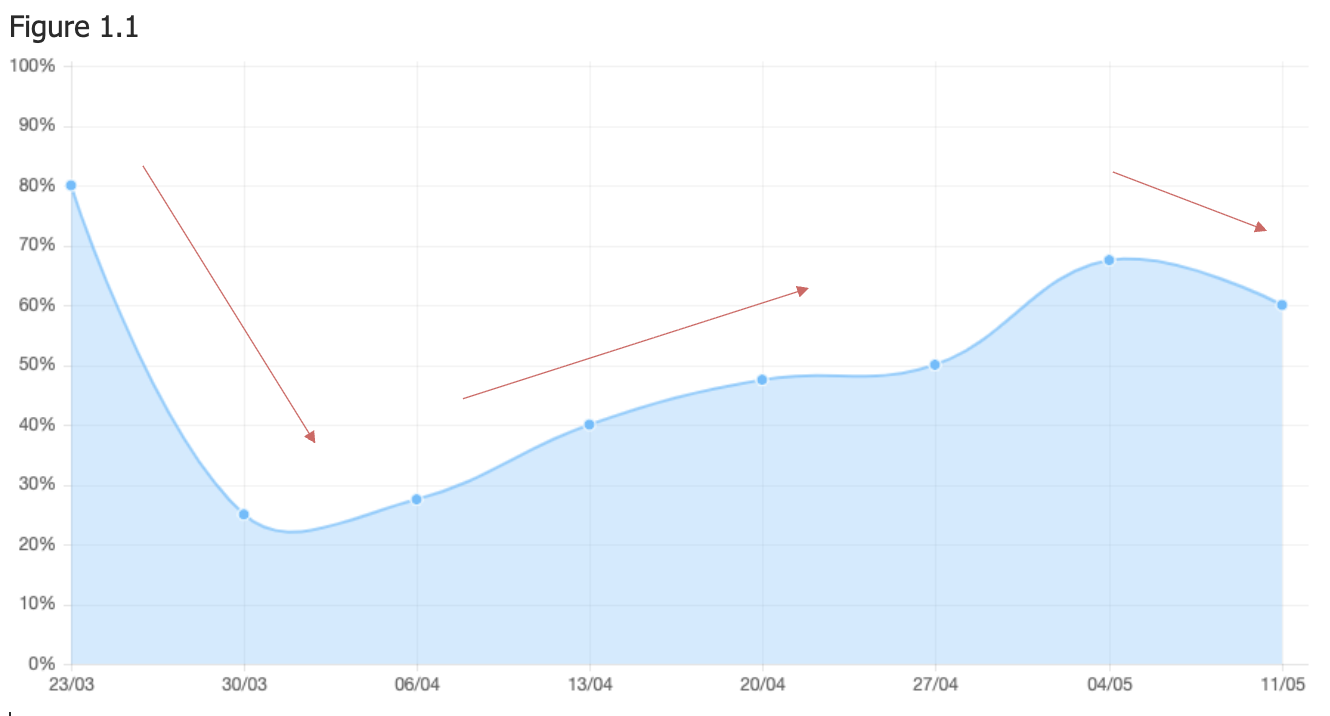
Overall wellbeing (as determined by the increased negativity of mindsets, resulting from heightened stress responses) for all users across the country immediately plunged 15% following the announcement.
Figure 1.1 strikingly displays the stress nervous response for an individual during this period.
The uncertainty generated by this highly unusual event proved an enormous psychological stressor and the impact on mindset is clearly captured in this data.
Indeed, studies have proven that uncertainty is a key instigator of the stress response. Experiments have demonstrated that the greater the degree of uncertainty experienced, the greater the amount of cortisol is released into the body. Cortisol is a steroid hormone produced in the adrenal glands during the stress response. This is a very important hormone in the stress response and plays a key role in shaping our mindset, thinking and indeed behavior in response to stressors.
The amygdala, within the limbic system of the brain, stores emotional memories associated with past negative experiences. It contains many receptors particularly sensitive to cortisol. When cortisol floods the amygdala during a stress response it mixes with another chemical, corticotropin releasing hormone (CRH). This incites what is known as “anticipatory anxiety” and suppresses production of testosterone. The combined effect of all this is to focus our attention on the negatives in any situation. Known as attentional bias it makes us view stimuli in our environment as threatening. We become more paranoid and amplify the negative. (Pawliw-Fry, 2015)
Research by John Coates of Cambridge University demonstrated this effect of uncertainty and subsequent spikes of cortisol on behavior. Before studying neuroscience at Cambridge, Coates was a derivatives trader on Wall St for the likes of Goldman Sachs and Deutsche Bank in the 2000’s.
Coates theorized that the physiology of the stress response triggered by increased uncertainty in either market bubbles or crashes had a deep effect on their trading decisions. In particular he believed it changed their risk preferences. To prove this, they studied traders in The City, London by collecting a range of bio markers from the traders over the course of the trading day. They found that in the times of increased uncertainty and pressure of bear markets (down markets), the cortisol levels of the traders increased so much they became risk averse with an irrational focus on negative information. Consequently, they missed buying opportunities.
With the teambleu software we have replicated aspects of this research over the last four years, not with bio markers, but by observing changes in the thought patterns of individuals. By identifying where mindsets are more negative, we can identify peaks in cortisol within the body and thus track the stress response.
Figure 1.1 captures this perfectly. The uncertainty generated by the Prime Minister’s announcement and the nation moving into an unprecedented once in a century lockdown prompted a clear and immediate stress response in the individual. It can be surmised cortisol peaked around the week of 30th of March, the first full week of lockdown, as the chart hits its lowest point with thinking at its most negative. We can then view the process of allostasis for the individual, the ongoing adaptive efforts within the body to maintain stability or homeostasis. As the individual adapts to this uncertainty the process of allostasis slowly brings the individual back to their baseline and levels of cortisol approach normal levels. Homeostasis is achieved five weeks after the initial lockdown during the week beginning 4th of May.
At this point we can see the beginnings of a significant new stress response and once more levels of cortisol begin to rise. This occurs precisely at the point when the country makes it’s first tentative steps out of lockdown. As people move back to workplaces for the first time in several weeks many new questions begin to occupy the mind. What will the future now hold? Will it be safe? Will the economy hold up? More uncertainty, a significant new psychological stressor, kicks off another stress response and we can see a sharp new downward trend commencing.
What makes Figure 1.1 even more compelling is the fact that it is the aggregation of all four key indicators utilized within the teambleu software to track the stress response.
By diving deeper into this data as shown in Figure 1.2 we can view these individual indicators. What is immediately obvious is that all four follow a dramatically similar trajectory.
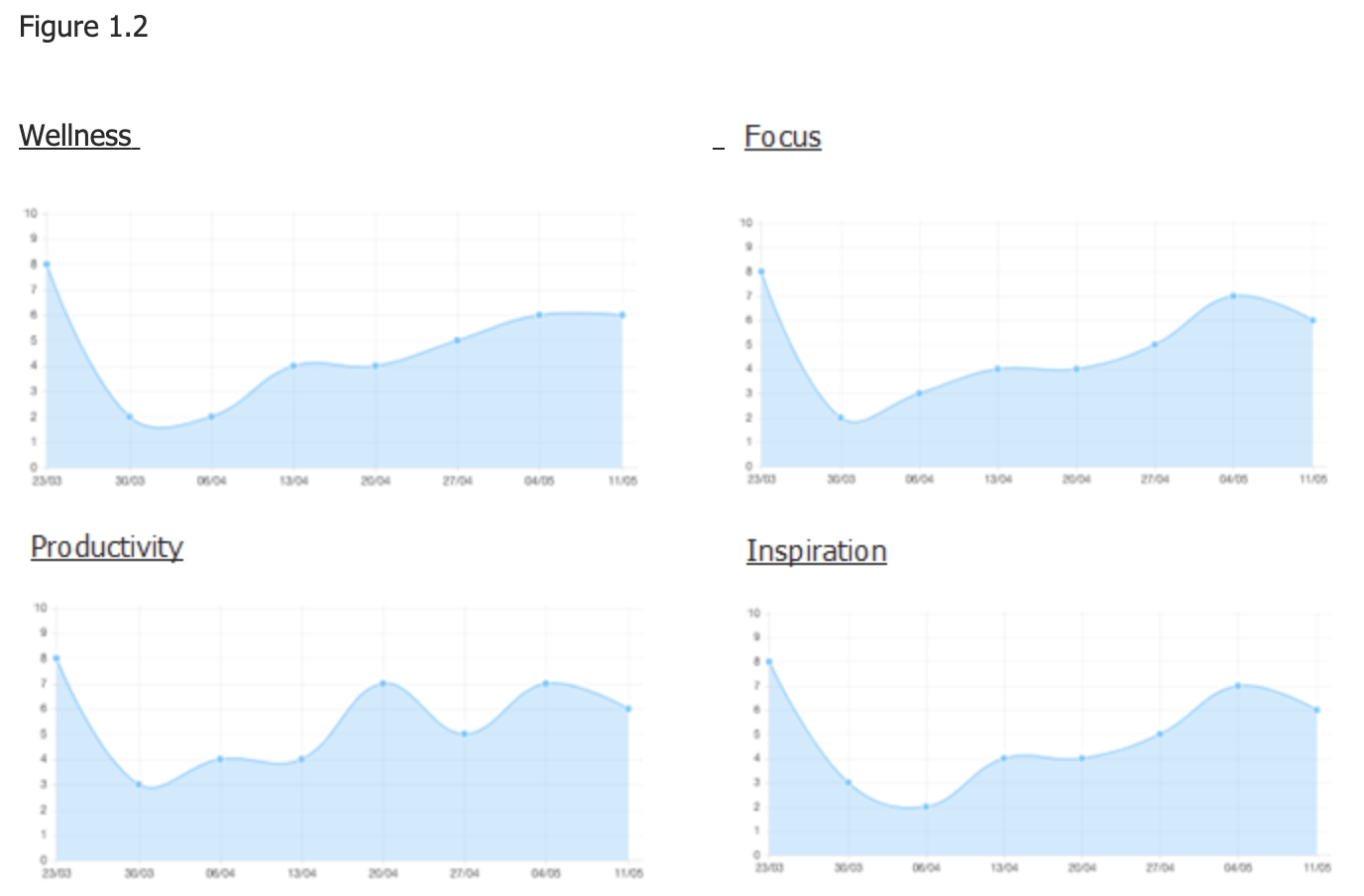
Figure 1.2 makes clear that what is being recorded is indeed attentional bias from increased cortisol attributable to a stress response. This pattern of increased negative thought processes simultaneous across all four diagnostics is indicative of what I have come to categorize as a Grade 5 Stress Response. On a scale of 1 – 5 with five being the most clear, obvious and severe stress response as calculated by degree of departure from an individual’s baseline and duration before recovery. Grades 3 and higher are indicative of a Chronic stress response.
A major study into the mental health impact of the pandemic in the UK found that in the early stages of their lockdown 57% of those involved reported symptoms of anxiety, with 64% recording common signs of depression. Kavita Vedhara, a professor of health psychology who led the study at the University of Nottingham explained “This is far in excess of levels usually seen in the UK.” Fear of contracting the virus, feeling lonely and not thinking positively were all strongly associated with how anxious and depressed people became. The study involving 3000 people even went as far as collecting hair samples from the participants to measure their cortisol levels. The aim being to see if increased levels of cortisol would affect the severity of Covid-19 infections. This is in recognition of the fact that cortisol plays a key role in emotional wellbeing and can also impact physical health making individuals potentially more vulnerable to infections. (Sample, 2020)
Dr Susanna Every-Palmer, Head of the Department of Psychological Medicine at the University of Otago in Wellington and her team studied the impact of the first nationwide lockdown in New Zealand. “We found that most people are resilient, but 30% of the 2010 surveyed New Zealanders reported moderate to severe psychological distress. Rates of distress were three times more for people in their 20’s than you would normally see…older people seemed particularly resilient. We speculated that could have been because older people have gone through difficult times before and have overcome adversity, so they would have a higher baseline level of resilience.”
While New Zealanders were relatively resilient to the short sharp shock of the initial lockdown Every-Palmer believes the ongoing strain of society grappling with the pandemic and additional efforts to restrain the virus in the community will have bigger impacts on mental health. (Mitchell, 2020)
“We are designed by evolution to deal with short bursts of stress, rather than sustained micro stresses, and as economic and social impacts start to bite deeper, that in itself is going to generate more stress and anxiety.”
According to Statistics New Zealand more than 40% of employed New Zealanders did at least some of their work from home during the Covid-19 lockdown and many have continued to do so.
Interestingly this change in where work is done hasn’t had much impact on reducing stress for employees.
New Zealand Chiropractors’ Association spokeswoman Dr Jenna Duehr explains “chiropractors are taking care of more people with anxiety, sleeping difficulties and stress related disorders through their ability to assist the nervous system…We might win with a reduction in the stress of commuting and more time spent with family, but these do not come without a cost to other aspects of our mental health and physical wellbeing.” (Taunton, 2020)
John Coates outlined in his book The Hour Between Dog and Wolf another key reason why we all need to develop greater awareness of the levels of chronic stress we are subjecting ourselves to. Prolonged exposure to cortisol can do long-term damage to those structures of the brain that have more cortisol receptors, the amygdala and the hippocampus. Receptors in the hippocampus, where factual information is stored shrink under the influence of cortisol, whereas in the amygdala they undergo significant growth. The amygdala records how you felt during a stressor or pressure event in the past, the hippocampus records the facts, what happened, who was involved This is why over time if subjected to chronic stress and therefore chronic increased levels of cortisol our thinking can become more emotional, more negative and less factual. (Pawliw-Fry, 2015)
Furthermore as we operate in our current environment there’s even more need for organizations, their leaders and employees to be aware of their decision making under stress. Taking risks and trying new things is often the best way to respond to times of crisis in order to embrace innovation, find new markets and gain a competitive edge. But with increased levels of cortisol what we generally see is organizations averse to risk, retrenching, downsizing, restructuring. All conservative risk averse strategies often the consequence of suboptimal decision making at all levels of the organization. Self-awareness, empathy and understanding the science of stress have never been more important to the survival and success of any business.
Gregory Berns, neuropsychology researcher and director of the Center for Neuropolicy at Emory University conducted a shocking experiment in the late 2000’s to investigate how fear and uncertainty affected people’s abilities to make good decisions.
Berns placed thirty-two willing participants into an MRI scanner and took images of their brains while he administered them with electric shocks. Initially he shocked them at random intervals of between one and thirty seconds at the maximum pain the participants believed they could tolerate.
He discovered once they had undergone a few shocks, their brains would light up on the MRI before the shock was even administered. The dread of the pain was as bad as the pain itself. Berns then offered the participants a choice. They could control the timing of the shock by choosing to have a big shock right away or have a smaller mild shock but have no control over the exact timing.
Most chose to have the shock straight away. Obviously a bad decision. Less pain is clearly a better outcome. Berns explained his findings “Fear, whether of pain or losing a job, does strange things to decision making. Fear overtakes our brains and makes it impossible to concentrate on anything but saving our skin. When the fear system of the brain is active (as during a stress nervous system response), exploratory activity and risk taking are turned off.” (Lyons, 2018)
The Rise of Chronic Stress in the Workplace
Global pandemics are fortunately very rare; however volatility, uncertainty, complexity and ambiguity have already become ubiquitous elements of our workplaces, a common if not intentional consequence of many of our standard workplace practices and management trends.
These trends have been exacerbated by factors such as globalization, emerging and disruptive technologies, increased competition in markets, rapid disruption of business models and industries, the rise of the gig economy, greater job insecurity…all fueling more pressure and uncertainty for organizations and their people, long before anyone ever heard of Covid-19.
In recent years many researchers and academics in the field have documented a subsequent rise of stress in the workplace and have been attempting to sound the alarm.
Jeffrey Pfeffer, a business professor at Stanford University and author of the 2017 book, Dying for a Paycheck states that companies;
“Regularly permit if not encourage management practices that literally sicken and kill their employees. Stress at work…just keeps getting worse for almost all jobs, resulting in an ever higher physical and psychological toll.”
Professor Gary Rees of Portsmouth University claims his own research shows employees are being pushed beyond their limits;
“Work has intensified. The expectations are higher. Companies don’t want to concern themselves with employee welfare. They just want to employ people who are resilient and who will just get on with it.”
Nicole Maestas an associate professor of health care policy at Harvard Medical School summarizes the findings of a 2017 survey of 3000 employees in the US by declaring “The workplace is a taxing, high pressure place for a lot of people.” (Lyons, 2018)
Dan Lyons author of Lab Rats – Why Modern Work Makes People Miserable makes the point that those suffering the most are those that many believe should be thriving in the Knowledge Age economy. These are the creatives, communicators, marketers, sales managers, software engineers and coders – those who work with their brains, are well educated and often among the highest earners. They work in shiny office spaces, “cool” work environments, with ping pong tables and foosball, beer stocked fridges and free snacks. They are not working long repetitive jobs on some factory production line. Their suffering may not be as easy to see on the surface, but the research, data and science shows us they are suffering nevertheless.
Unpredictable Chronic Mild Stress Protocol
Some key insights into understanding how it is that modern workplaces are generating so much harm for their employees via triggering of their stress nervous system response can be gained by examining how scientists go about studying depression on animals in the lab.
In order to study depression, to perhaps test out a new antidepressant for instance, scientists must first have a depressed subject. Fortunately, people are not used for such experiments, but rats make for excellent observations, once of course they have been induced into depression. To achieve this in rats or other animals, scientists follow a process of making a series of minor but constant changes to the animal’s environment. That is subject them to low grade stress and maintain this low grade stress for a while. A process known as Unpredictable Chronic Mild Stress (UCMS) Protocol. For rats this process might involve putting them into a new cage, changing the angle of the cage, changing the cycle of light and dark, placing straw in the cage used by another rat, placing them in a tight tube for 15 minutes then putting them back in the cage, playing recordings of predator birds for 15 minutes etc. The changes are randomized and altered frequently. The rats are not deprived of any food or water or subjected to physical pain. No physical or threats to life occur, no danger, just small changes to the environment and mild stress.
The process takes a number of weeks whereby the rats descend into something that looks a lot like depression would for a human. They become apathetic and lethargic, stop caring for their appearance, lose interest in exercise, lose motivation for seeking out treats, gain weight, display signs of despair, have difficulty making decisions, suffer sleep disturbances. They of course exhibit higher levels of cortisol, immune system dysfunction and damage in the hippocampus and amygdala. (Lyons, 2018)
Dan Lyons points out, rather disturbingly, that this process of inducing depression in lab rats is eerily similar to the experiences of employees in the modern workplace with its adoption of “hot desking” and other fads. “There’s no danger to our physical safety. But there are constant, random changes. Loss of privacy or familiarity…Consider how big companies are rushing around adopting Agile and Lean Startup, changing where and how people work, forcing employees to embrace new routines, and crowding workers into stressful new environments like noisy open offices. Think about how we’re working longer hours but also less predictable hours. Or how we now worry more than ever about losing our jobs and whether we will be able to retire. Think about how often you hear someone at work say, change is the only constant.”
Over the last four years we’ve sadly captured numerous examples of stress responses that appear to be the result of what could be chronic mild stress in the workplace. Unlike Figure 1 which highlights a stress response from an obvious acute stressor, these are not always as easy and obvious to identify but become visible when examining longer trends over more extended time periods.
Such an example is documented below.
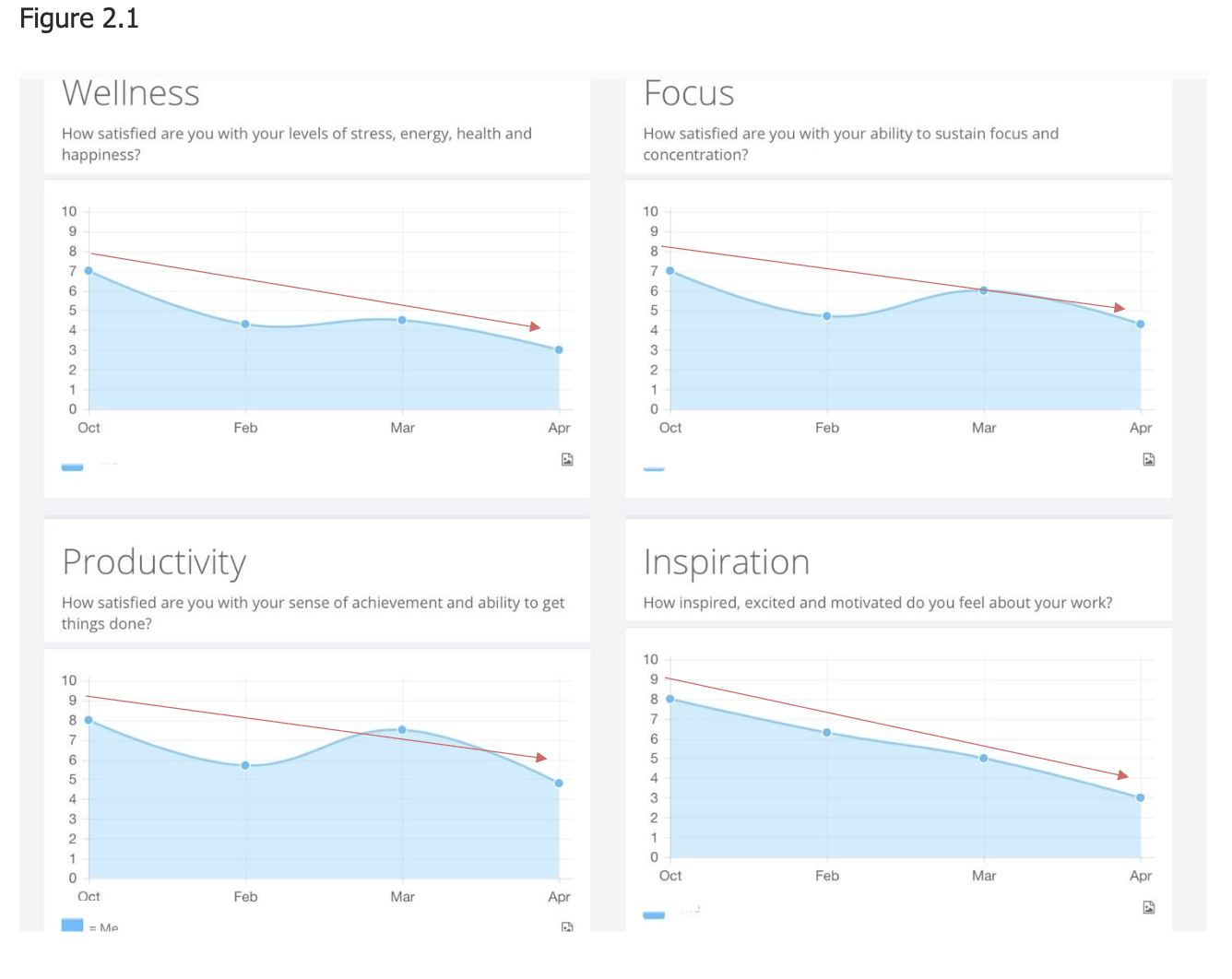
Here we can see an example of an individual experiencing an extended period of persistently more negative thinking over a seven-month time period. No global pandemics were involved here, this data is from October 2018 to April 2019. Note that each monthly data point on these charts is the average of four data captures from the individual. They are not one-off markers in time. We can view a gradual decline from an average of 7.5 in October to 3.75 in April.
This makes for somber viewing when reflecting that this is more than just data, there’s no lab rats involved, this data represents a real person, an individual whose wellbeing and health is in significant jeopardy. As stated, this could be indicative of an individual subject to something akin to chronic unpredictable mild stress generated by nothing more than exposure to a perfectly ordinary professional workplace.
Professor Stafford Lightman an expert in stress related disease at Bristol University states that if cortisol levels are raised continuously over 24 hours, the response it provokes can start to cause damage. Lightman explains “Cortisol is an anticipatory hormone, which is normally at its highest when you wake up, but you need a holiday from it so your body can recuperate.” (Crompton, 2019)
Often when considering workplace stress, we tend to gravitate to consideration of the big and obvious factors of psychological risk, workplace bullying, lack of resources, high risk or dangerous work environments or work activities, long hours, restructures, high turnover. None of these were relevant factors for the particular workplace involved in this example for this time period.
The types of stressors that might be at play here can go completely under the radar. But with our stress response being continuously triggered, our physiological responses never get a rest, a prolonged state of hypervigilance and repetitive negative thinking that prolongs our departure from baseline mindset.
Dr David R Williams, Professor of Public Health and Professor of African and African American Studies and Sociology at Harvard’s TH Chan School of Public Health, states that this scientific principle can help explain the striking health inequalities in the US between white and African Americans. It is well documented in studies over the last 20 years that African Americans have higher rates of chronic illness. Differences of income and education don’t account for these inequalities. Williams explains that African Americans suffer everyday discrimination or “micro-aggressions” as he terms them, such as receiving poor customer service due to race. “These little day to day indignities all add up with the big things and create a level of ongoing chronic stress.” Days spent in this hyperadrenalized state, a consequence of the stress response being continuously activated, mean the body is more vigilant even when asleep at night, preventing rejuvenation. Studies comparing blood pressure tests in healthy young people, taken at intervals day and night, show that African Americans maintain higher levels of blood pressure even while they were sleeping. There was no racial difference in blood pressure during the day. (Williams, 2020)
When looking at one off data such as Figure 2.1 we of course can’t identify the source of the stress for this individual. There could be a combination of stressors generated by both workplace and personal life. But as our work lives and personal lives become increasingly blurred and intertwined, is making such a distinction even important?
Certainly, from a leadership and organizational perspective, fulfilling a duty of care to employees, requires a much closer examination of our accepted work practices, policies and team cultures and dynamics to ensure risk factors are being identified and minimized. Even the basic and standard elements of how we typically manage and organize teams and workplaces can cumulatively be placing individuals at considerable risk of harm. It is not a question of intention, but an element of ignorance of the science of stress that can be placing the health of employees at risk. Our workplaces and organizations need to catch up with the science of stress. The biggest health and safety risks to those in the modern workplace are not physical but psychological in nature.
Some early signs of moderate to high levels of stress and their impact on mental wellbeing can include: impaired sleep; rumination; irritability; lack of patience; feelings of sadness, anxiety or depression; lack of contentment or joy; lack of energy; and problems with concentration. Chronic triggering of the stress response can cause imbalances of the brain’s neurochemistry. For instance, serotonin, a neurochemical which is important for elevating our mood, an imbalance of this can leave an individual feeling depressed. Production of melatonin can be impaired, disrupting natural sleep cycles. The balance of Dopamine, key to our experience of pleasure, joy, desire and motivation can also be disrupted. All of which, in conjunction with other imbalances, can eventually put an individual at greater risk of developing serious conditions such as depression, anxiety, bipolar disorder, schizophrenia, phobias, panic attacks, PTSD, eating disorders, ADHD and compulsive behavior. (Huljich, 2014)
Figure 2.1 could well be indicative of an individual at heightened risk of their mental health being compromised by factors such as burnout or some forms or subtypes of depression.
Burnout is typically described as a long slow decline, whereby an individual feels physically and mentally incapable of making change. Elements of burnout include emotional exhaustion, cynicism, inability to get things done, and chronic negative reactions to the workplace environment. (Brown, 2013).
Psychologist Christina Maslach defines burnout as “a psychological syndrome emerging as a prolonged response to chronic interpersonal stressors on the job. The three key dimensions of this response are an overwhelming exhaustion, feelings of cynicism and detachment from the job, and a sense of ineffectiveness and lack of accomplishment.” (Tulshyan, 2021)
These are all elements the teambleu software is capable of monitoring as illustrated in Figure 2.1
According to the Journal of Applied Biobehavioural Research burnout is having a growing impact on workplaces in developed economies and is especially a factor during periods of economic decline. Obviously as the entire world grapples with the fallout and hit to economies from the Covid-19 pandemic, burnout will be major issue requiring greater awareness within workplaces.
Even before the Covid-19 pandemic swept the world Gallop reported that two thirds of fulltime workers experienced burnout on the job. (Brown J. C., 2020)
In New Zealand research from AUT of around 1000 managers and employees at various points between February 2020 and November 2021 showed that those at high risk of burnout rose from one in ten at the start of the Covid pandemic to one in three. Organizational psychology academic Professor Jarrod Haar of AUT’s business school describes four signs of burnout; exhaustion (both physical and mental), a lack of emotional control; indifference to work (including mental distance, lack of inspiration, feeling your work has little value) and trouble staying focused.
To be classed as high risk of burnout an individual had to score highly for each indicator, any one criteria by itself can’t be relied upon. If workers score highly across all these areas, the diagnosis is clear.
These indicators are replicated within the teambleu sensor and tracked by the teambleu software which individuals interact with on a consistent weekly basis.
The analysis paints a woeful and worsening picture of the health of the NZ workforce according to Haar.
Haar says if an individual does experience burnout, it can take two or three months of time off work to recover.
Some other key finding from the AUT research highlighted:
- Those most tied to the office via technology were seven times more at risk of burnout.
- Maori employees had a six times higher risk.
- Those in highly bureaucratic firms were four times higher risk.
- Those working from home were had twice the risk.
- Managers were 2.4 times as likely to be at risk of burnout
Burnout has recently been included by the World Health Organisation among its International Classification of Diseases (UCD-11), noting that those impacted can also experience reduced professional efficacy and energy depletion. While not classified as a medical condition, burnout is still considered an occupational phenomenon with physical and mental risks.
Professor Haar’s research included a survey of 1000 New Zealand workers and “revealed burned out workers were much more likely to report higher anxiety and depression. They were also more likely to experience psychological and psychosomatic symptoms, like stomach cramps and trouble sleeping.”
Haar’s results revealed those at greatest risk of burnout were managers (219% more likely to be burned out), and workers under the age of 29 (206% more likely). Gender, marital, parental status and whether employees worked at the office or from home didn’t significantly affect the levels of burnout identified. Interestingly workers at large firms (51 plus employees) were over 150 times more likely to be burned out than the average worker. These are of course the very firms who have invested their significant resources in numerous employee wellbeing initiatives in recent times. Clearly there needs to be far greater accountability and assessment of this investment and its effectiveness. Indeed, there are calls for the likes of WorkSafe NZ to step in and help develop regulation that prevents burnout. The New Zealand Health and Safety in Employment Amendment Act 2002 already gives employers a duty of care to prevent job stress. (Adams, 2021)
The phenomenon of burnout has been the growing focus of attention well before the Covid pandemic struck. Experts however agree that the shift to working from home that is now more widely embraced by employers, is now a major driver of the soaring numbers of people being affected by burnout. Research has proven that when we work from home most people end up working longer hours and have a much harder time maintaining work-life boundaries.
Leading organizational psychologist Adam Grant, whose 2020 TED talk “Burnout is Everyone’s Problem” helped draw new attention to the issue, “there’s concern for many they may lose their jobs if they don’t prove they’re working all the time…that’s contributing to the ‘always on’ issue. Hustle culture, where you prove your worth by working all the time, I don’t think is good for anyone, employee or employer. We know the quality of work suffers as people take on more hours.”
According to the World Health Organization, burnout is the result of chronic workplace stress that has not been successfully managed and is characterized by the following; feelings of energy depletion or exhaustion; increased mental distance from one’s job or feelings of negativity or cynicism related to one’s job; and reduced professional efficacy. It is defined as an occupational phenomenon rather than a health condition but if left unchecked can be detrimental to health.
Grant explains that;
“burnout predicts a cascade of physical health problems. We know that burnout is a predictor of depression. Exhaustion often leads people to become really sad and the loss of energy is a big part of that. There’s evidence burnout also contributes to memory loss.”
Research has also linked burnout to sleep disturbances, weakened immune systems and a heightened risk of cardiovascular disease.
Psychotherapist Lola Borg says her client’s physical symptoms of burnout manifest in numerous ways including aches, pains, backache, headache and disturbed sleep. “Stress comes and goes but burnout stays. It isn’t going to be fixed by a weekend away, its more prolonged than that.” (Silverman, 2021)
Having real time visibility and transparency for the levels of psychological stress and pressure within teams, departments and organizations enabled by artificial intelligence powered software as developed by teambleu would be critical first step to addressing this growing health crisis.
Burnout can be chronic in nature, affect employees at all organizational levels and be detrimental to health and performance. Prevention is always the most effective strategy for minimizing the risk of employee burnout. Ensuring employees have greater awareness of their thought processes (metacognition) is a key method for supporting employees to achieve this and minimize risk. With its focus on prevention and metacognition it becomes obvious the teambleu software should be an essential and integral component embedded within every team and workplace.
A combination of workplace stressors that might lead to burnout and the types of thought patterns identified for the individual in Figure 2.1 include: (Canada Life, 2019)
- An individual’s high personal expectations
- Constantly feeling their work is not good enough
- Feeling inadequate or incompetent
- Feeling underappreciated for work efforts
- Having unreasonable targets set for them
- Being in a role that is not a good job fit
Persistent or repetitive negative thinking can be indicative of a more pessimistic mindset, a precursor and risk factor for some forms of depression or impaired mental health.
Adam Grant, an organizational psychologist at Wharton explains that mental health is often described on a spectrum from depression to flourishing. “Flourishing is the peak of well-being: You have strong sense of meaning, mastery and mattering to others. Depression is the valley of ill-being. You feel despondent, drained and worthless.”
A point on this spectrum that is becoming increasingly recognizable to many workers, shares some characteristics with both burnout and depression but in fact has its own name; languishing.
Unlike burnout individuals experiencing languishing still have energy, unlike depression they don’t feel hopeless. Languishing is a point where an individual might feel joyless and aimless, a sense of stagnation and emptiness, “as if you’re muddling through your days, looking at your life through a foggy windshield.”
Grant labels languishing as the “neglected middle child of mental health…the void between depression and flourishing. You don’t have mental illness but you’re not the picture of mental health either.”
An individual in a mental state of languishing is certainly not operating at full capacity, it is believed to be more common than major depression and may even be a bigger risk factor for mental illness. “Languishing dulls your motivation, disrupts your ability to focus, and triples the odds that you’ll cut back on work.”
The mental health concept of “languishing” was first developed by a sociologist named Corey Keyes who realized that many people who weren’t technically depressed still weren’t thriving either. His research indicates that those currently experiencing languishing today are most likely to develop major depression and anxiety disorders in the next decade.
This was supported by evidence from studies of health care workers in Italy during the pandemic. Individuals who were languishing in the northern Spring of 2020 were three times more likely than their peers to be diagnosed with pot-traumatic stress disorder.
Once again one of the big dangers of languishing is that often the individual fails to notice or realize their slow decline into this mental health state “you might not notice the dulling of delight or the dwindling of drive. You don’t catch yourself slipping slowly into solitude; you’re indifferent to your indifference. When you can’t see your own suffering, you don’t seek help or even do much to help yourself.” (Grant, 2021)
“Mental health is no different to physical health. No one is immune”
– Dr Julie Smith, Clinical Psychologist
Indeed how can you tell if you’re languishing, flourishing or somewhere else in between?
It turns out that regularly checking in with yourself with some key questions to promote self-reflection and awareness is a very effective diagnostic tool. As Laurie Santos, a psychology professor at Yale who teaches The Science of Wellbeing explains “You are kind of the expert on your own sense of flourishing.” (Blum, 2021)
This highlights the important role that the teambleu software can play with assisting proactive and preventative management of health and wellbeing. By providing clear consistent, data to individuals with minimal fuss or burden on that individual. This makes it sustainable for the individual to gather long term data and insights. As was the case with the teambleu study group who engaged with the technology every week for four years. The very process of engaging the individual in capturing this data supports the learning of critical skills of meta-cognition and emotional self-regulation. By gaining greater insight into their thought processes over time, individuals increase their chances of early detection of a decline, no matter how gradual, of their mindset and potential risk to their health and high performance potential.
Rather than aiming to diagnose specific mental health conditions such as burnout or languishing the software aided by machine learning and smart algorithms continuously analyses the mindset of individuals to qualify and quantify stress levels and spot early risk factors. Enhancing the ability for personal proactive and preventative health measures to be taken, and if necessary, under the guidance and care of a qualified health professional.
As baseline mindsets are slowly eroded by continual exposure to mild stress the individual can unconsciously identify this baseline as a new normal. Individual users of the teambleu software over the last four years have reported this as being one of the most powerful and confronting aspects of the application. Being presented with clear and simple data displaying a clear roadmap of their mindset over time has empowered them with new insights. Trends they wouldn’t have otherwise been able to identify or recognize.
This has inspired individuals to examine more closely aspects of their lifestyles and work, taking positive action and steps to deliver change in order to better preserve their personal health.
To achieve this level of insight however the onus remains on the individual. It is on them to examine their data, configure to view short and long term time periods, identify and spot the trends for themselves. The data as displayed in Figure 2.1 would only be visible to the individual. It is plausible this individual did not identify the long term trends that are represented.
Alex Korb, neuroscientist in the department of psychiatry at the University of California, Los Angeles explains in his book The Upward Spiral that for most people taking positive steps to disrupt negative thought patterns early enough, stimulating activity in various brain circuits, can allow them to prevent a downward spiral into depression. For others of course it isn’t so easy. Once in a depressive mood it can be a very stable state, the brain becomes stuck and small actions and life changes that can make an impact like exercise or socializing can feel daunting and overwhelming. (Korb, 2015)
By supporting individuals to develop skills in meta-cognition and emotional self-regulation teambleu can assist individuals with sustaining positive mindsets and thought patterns that can best serve them for prevention of stress related illness. As users have documented over the four years of this research, it can even inspire what Korb refers to as “upward spirals” that positively impact wellbeing and health. Korb explains that our neural circuits have just as much potential for this as depression. Small positive life changes “can actually cause positive neural changes – in the brain’s electrical activity, its chemical composition, even its ability to produce new neurons. These brain changes alter the tuning of your brain’s circuitry and lead to further positive life changes.” (Korb, 2015)
With the teambleu software users have found it is as much about identifying the good and positive thought patterns as it is the bad.
Examining trends that indicate positive mindsets enables users to better examine what it was that worked for them during those periods.
If downward trends are identified, then the individual can consider what lifestyle factors or good habits might have fallen by the wayside, that if reinstated or given due priority, might once again get them back on track.
Is my thinking more negative this month compared to last? Is my baseline mindset for this quarter more negative than for the preceding 12 months? Is my mindset more negative in winter months compared to summer? Have I experienced more Grade 3 or above stress levels this year / month / quarter compared to last?
These are questions perhaps few would often consider. But as shown the answers can reveal much about our exposure to chronic stress, our mental health risk factors, and have serious consequences for long term health and wellbeing both mental and physical.
More science is continually emerging to support this. Even if we remain relatively unscathed in the short term, even if it doesn’t kill us in the medium term, a career exposed to chronic stress can have serious consequences for our quality of life as we age.
In June of 2020 results published from a new study found that repetitive negative thinking from the age of 55 onwards was linked to cognitive decline and greater deposits of harmful proteins in the brain responsible for Alzheimer’s disease.
Brain scans taken of research participants showed people who spent more time with negative mindsets had more tau and beta amyloid buildup, worse memory and greater cognitive decline over a four-year period. Lead author Dr Natalie Marchant, a psychologist and senior research fellow in the department of mental health at University College London stated “We propose that repetitive negative thinking may be a new risk factor for dementia…Taken alongside other studies which link depression and anxiety with dementia risk, we expect that chronic negative thinking patterns over a long period of time could increase the risk of dementia.”
“Our thoughts can have a biological impact on our physical health, which might be positive or negative. Looking after your mental health is important, and it should be a major public health priority, as it’s not only important for people’s health and wellbeing in the short term, but it could also impact your eventual risk of dementia,” explained co-author Dr. Gael Chetelat of Inserm Universite de Caen-Normandie.
Commenting on this study neurologist Dr. Richard Isaacson, founder of the Alzheimer’s Prevention Clinic at New York Presbyterian and Weill Cornell Medical Center said “This is the first study showing a biological relationship between repetitive negative thinking and Alzheimer’s pathology, and gives physicians a more precise way to assess risk and offer more personally tailored interventions…Many people at risk are unaware about the specific negative impact of worry and rumination directly on the brain. ” (LaMotte, 2020)
Prior research supports these findings. Persistent positive or negative thinking is symptomatic of an optimistic or pessimistic mindset.
According to a 2019 study involving a meta-analysis of nearly 300,000 people, those with more positive mindsets, had greater protection from heart attacks, stroke and any cause of death.
Lead author of the study cardiologist Dr. Alan Rozanski, a professor of medicine at the Icahn School of Medicine at Mount Sinai, who studies optimism’s health impacts, explains the more positive the mindset the greater the protection.
Rozanski clarifies that positive mindsets and optimism should not be confused with happiness as there is a key difference. “Happiness is an emotion, it’s transient. People may have more moments of happiness than others…but it’s just a description of a feeling. Optimism, however, is a mindset.”
Developing the tools for being more aware of your thought patterns and managing them effectively is not to be confused with the “positive vibe” social media propagated self-help movement.
“Positive thoughts are great, they’re not bad. But there is this sort of movement online around only positive vibes; don’t allow the negative thoughts to be there. If you have that standard for yourself, as soon as negative thoughts start to appear that you can’t control, you start feeling like you’re failing or that you’re not positive enough. That you’re not enough in general. It sets you up to feel worse.”
– Dr Julie Smith, Clinical Psychologist
With teambleu prototype software utilized for this research we captured both mood and mindset. How an individual answers one week may reflect their mood, levels of pressure and stress they are experiencing at any given time or any given week, but by consistently interacting with the weekly sensor, responding to the exact same questions each week for four years, we were also able to extrapolate a rolling 12 week baseline indicative of more habitual ways of thinking for each individual, their mindset.
Another study released August 2019 and published in the journal Proceedings of the National Academy of Sciences revealed those with highest levels of optimism had an 11% to 15% longer life span on average than those with more negative thinking. The most optimistic had the greatest odds of living to age 85 or beyond.
The red flags here for those responsible for a duty of care to employees are obvious. Our workplaces are negatively impacting the mindsets of their people with persistent chronic stress. Risking damage to brains and bodies. Risk and damage that is compounded over time by making those brains more negative in their thinking, potentially turning even optimistic brains into pessimistic ones and thereby exposing the individual to a whole new range of additional health risk factors.
Often the focus of investment on people in the workplace with a variety of wellbeing initiatives is on making them happy. Measured in flawed moment in time surveys or pulse survey tools to gauge the vibe of people and the office environment. As Rozanski states however this is but a fleeting emotion. A much greater return on investment on people at work would be gained by helping those individuals gain greater awareness of their thinking & mindset over time, making them aware of the science of stress, their risk factors and training them in scientifically researched and supported methodologies for building and supporting optimism. For emerging science is showing us that optimism can indeed be learned and is a vital protective mechanism for overcoming damages and risks inflicted from chronic stress. (LaMotte, Why being an optimist is good for your heart, 2019)
A key learning is that as humans our advanced brains can get us into significant trouble, they can also help to get us out of it. We are not rats ordained to be victims of our environment. Advances in neuroscience and psychology are teaching us more about this all the time. What is needed and clearly evidenced from my research is that this knowledge needs to be more accessible to knowledge age workers if they are to be better equipped to handle the rigors of the modern workplace. None of this absolves workplaces from their responsibilities to identify and minimize risks for harm to their people in the first instance. This is where all those responsible for leading our organizations need to be better informed by science rather than merely indoctrinated in management theory.
Duty of Care
Certainly, from a leadership and organizational perspective, fulfilling a duty of care to employees, requires a much closer examination of our accepted work practices, policies and team cultures and dynamics to ensure risk factors are being identified and minimized. Even the basic and standard elements of how we typically manage and organize teams and workplaces can cumulatively be placing individuals at considerable risk of harm. Our workplaces and organizations need to catch up with the science of stress.
The biggest health and safety risks to those in the modern workplace are not physical but psychological in nature.
Dr Hillary Bennett, a registered psychologist, has been consulting for decades both in New Zealand and internationally, private and public sectors, specializing in the leadership of safety and wellbeing at work.
She is a recent author of a guide for the Business Leader’s Health and Safety Forum on protecting mental wellbeing at work.
Dr Bennett is firmly of the opinion, supported by data, that mental harm is increasing due to modern work practices and while it has become popular for many organizations to offer employee wellbeing programs such as yoga sessions and free fruit on Fridays, even encouraging the use of wellbeing apps, or counselling services, these initiatives fall well short of the mark.
Dr Bennett emphasizes the key point that today’s organizations are failing to see – it is the workplace that is harming our people, it’s up to the leaders to fix that, not try to fix the individual. Bennett explains that one in four New Zealanders will be experiencing a mental health challenge, that is not flourishing, at any one time.
Dr Bennett states that there are a much wider range of psychological risks to health and wellbeing in our teams and workplaces “we tend to go the classic ones of bullying and harassment which obviously are key issues…but there a much wider range of factors that can influence wellbeing.”
Bennett says she hasn’t seen the identification of these risks to people in the workplace done well anywhere. Leaders and organizations need to be more proactive in this, ensuring a comprehensive risk identification and minimization plan is in place. This goes beyond standard workplace wellbeing initiatives.
“We are putting way too much onus on the individual to prevent burnout. It is not merely the individual’s responsibility to tackle burnout – because it’s not an individual problem. Leadership must be central to any conversation about burnout.” – Suzi McAlpine, Author; Beyond Burnout
The obligation for this whether you are a small business or large one is the same, it more than a moral obligation it is in fact a legal obligation. (Bennett, 2021)
Pressure as a Stressor on Performance
Never has the pressure to perform at work been greater. With emerging & disruptive technologies, globalization, intensified competition, job insecurity, global pandemics, the fight for business survival, our workplaces and their leaders have a razor-sharp focus on results.
This is amplified with common management practices and the drive to be in control, no matter how out of control our world may seem. This desire is often manifested in the urge to intensely scrutinize and measure every aspect of the output of our work. In particular on those things which are easy to measure, our organizations are awash with myriad financial and production data, sales & marketing metrics. Unfortunately, those things which are typically easy to measure at work are rarely the right things to focus on if we wish to optimize performance.
In our workplaces we tend to confuse results with performance. All those key metrics which we watch so carefully and report on to executives and boards, do not capture performance, they show results. When we conduct performance reviews, we are not reviewing performance, we are reviewing results. Performance is all the factors involved in actually supporting us to achieve results.
At work we confuse results with performance. All those key metrics which we watch so carefully and report on to executives and boards, do not capture performance, they show results. When we conduct performance reviews, we are not reviewing performance, we are reviewing results. Performance is all the factors involved in actually supporting us to achieve results.
When Beauden Barrett lines up a kick at goal the last thing his coach and teammates do is thrust the scoreboard in his face. But in essence this is exactly what we’re doing, with increasing regularity, to workers and their managers.
The analogy is actually not a good one. Because Barrett is provided with the mental skills training to assist him with processing this pressure as a stressor. He is educated and trained in the latest performance science to understand exactly the impact this pressure, the subsequent stress response, has on his body and his mindset, how best to manage this pressure to ensure he can perform to his highest potential possible under pressure. This is the same for any high-performance professional athlete. This is most definitely not the case for the typical ever more pressured employee. Furthermore, Beauden Barrett gets to run around when subjected to the most intense on field pressure which occurs during short bursts of around 80 minutes. This physical activity helps dissipate the stress hormones quickly from his body. The typical knowledge age worker is compelled to sit perfectly still at a desk, whether in the office of working from home, for many hours on end, most days a week. Just two hours of solid concentration is enough to trigger the stress nervous system response and spike levels of cortisol.
While sitting still they do not dissipate as intended by the evolutionary gods when they invented the flight or fight response in the first place.
Not only is the increasing pressure for results leading to increased triggering of our stress nervous system response, damaging our health and wellbeing, its undermining our performance. It’s severely limiting our ability to achieve the results our organizations so desperately need right now.
How so?
As shown stress has a negative impact on mindsets, thought patterns and emotions.
However extensive research now details that positive mindsets and emotions are required to prime an individual to perform at their best.
Barbara Lee Fredrickson, professor in the department of Psychology at the University of North Carolina has described how positive thought processes have an important evolutionary purpose that she has termed the “Broaden and Build Theory.” As opposed to narrowing focus to fight or flight as negative emotions do, positive thought patterns in fact broaden the amount of possibilities we can process, enabling individuals to be more open to new ideas, more thoughtful and creative. When scientists prime individuals to evoke a positive mindset with feelings of contentment or amusement it’s been shown they can think of a larger scope of ideas than those primed to feel either anxiety or anger. “And when positive emotions broaden our scope of cognition and behavior in this way, they not only make us more creative, they help us build more intellectual, social and physical resources we can rely on in the future.” (Achor, 2010)
Shawn Achor in his book “The Happiness Advantage” explains the biological nature of this broadening effect and that positive thought processes in fact offer a chemical competitive advantage, “Positive emotions flood our brains with dopamine and serotonin, chemicals that not only make us feel good, but dial up the learning centers of our brains to higher levels. They help us organize new information, keep that information in the brain longer, and retrieve it faster later on. And they enable us to make and sustain more neural connections, which allows us to think more quickly and creatively, become more skilled at complex analysis and problem solving, and see and invent new ways of doing things.” (Achor, 2010)
Positive thought processes also help us literally see more of what is around us. A University of Toronto study found that more positive mindsets change how our visual cortex processes information. In their experiment those primed for a more negative mindset didn’t process all the images in a series of pictures shown to them. They in fact missed significant parts of the background in the images. Those primed for more positive thoughts saw everything. Eye tracking experiments have shown the same thing. Positive mindsets actually expand our peripheral line of vision. (Achor, 2010)
Clearly a real edge is on offer for the performance of both knowledge age workers and professional athletes. Both need to process complex information more quickly, explore new ways of doing things, be open to new ideas and/or coaching methods. Most professional sports people would see the benefit of having their peripheral vision enhanced, seeing the opportunities and space in front of them more quickly, the opposing player or even the ball coming from a different angle. Workers in some settings might even be at more risk of harm or injury if their peripheral vision was compromised while operating machinery on the factory floor or warehouse for instance.
Our brain has the greatest influence on our ability to perform under pressure whether behind a computer or on a sports field. Our mental response makes the difference.
This is where mind management, the critical skills of meta-cognition and emotional self-regulation come to the fore. Skills that leaders would be well served to grow and develop within themselves and their teams.
As Shawn Achor highlights; too often we tell ourselves that we’ll feel good about ourselves and be more positive in our outlook once we’ve achieved a certain goal or objective. We believe we need to sacrifice happiness in the name of hard work and success. But new and emerging psychology and neuroscience proves we have this the wrong way around. We are in fact more successful when we are more positive in the first place.
Achor points to research which has shown doctors primed for positivity before making a diagnosis display three times more intelligence and creativity than doctors in a neutral state, they make accurate diagnoses 19 percent faster. Optimistic salespeople outsell their pessimistic counterparts by 56 percent. Students primed for positivity before taking math tests far outperform their neutral peers. “It turns out that our brains are literally hardwired to perform at their best not when they are negative or even neutral, but when they are positive.” (Achor, 2010)
Yet in today’s workplaces we ironically sacrifice happiness for success, only to lower our brains’ success rate. We rigidly adhere to workplace norms and practices that busy our brains and scientifically undermine the performance potential of people.
It is important however not to view negative thinking as some kind of defect, it is in fact a default position of the human psyche, integral to its survival system. We are designed of course for survival first, high performance second.
Negative tendencies are key to planning for the worst and focusing on details, caution and vigilance have been key to our very survival afterall.
But excess negativity is an indication of a struggle for balance between the Prefrontal Cortex and the limbic system of the brain. (Annibali, 2015)
A balance that is essential not just for our health but also for ability to achieve optimal performance.
Our brains achieve this balance by mitigating the negative emotional inclinations of regions within the more primitive areas of the brain with the ability to apply logic and reasoning from the Prefrontal Cortex.
Balancing the Brain
At teambleu we’ve adopted and adapted a simple colour coded model for assisting both individuals and leaders to understand the impact of stress on the brain, the imbalances it causes, and for integrating mind management techniques and proactive stress management strategies.
This model is built upon understanding of how the brain is structured in three parts.
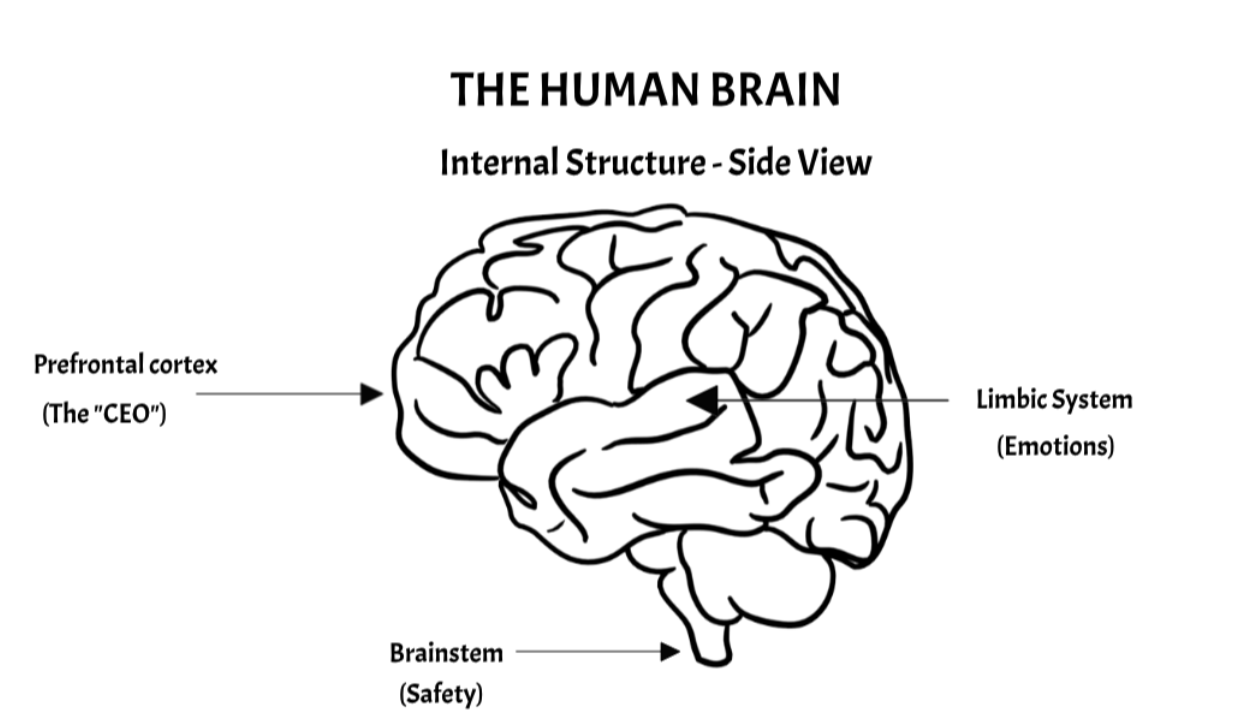
The first is called the Brainstem, located at the base of the brain, responsible for basic survival functions. Fully developed at birth we share this part of the brain with reptiles and other mammals.
The second is called the Limbic System, sitting at the heart of the brain, contains the Amygdala, and is responsible for processing information about our emotions. This develops after the Brainstem and goes through rapid change in our first year of life. Located in the middle of the brain beneath the cortex. Major components include the anterior cingulate, the basal ganglia, the Amygdala and the Thalamus. The Anterior Cingulate is “the brain’s gear stick” when this is too active an individual can become stuck and problems can include negative ruminations, obsessions, compulsions and addictions. The Basal Ganglia “sets the rate of your body’s idle” too high and you’ll feel chronic anxiety. The Amygdala is involved with basic survival, an early alarm system, assesses threats and triggers fight or flight. As previously discussed, consistent exposure to stress can create overactivation of the Amygdala, which then effectively hijacks the PFC, overwhelmed by fear and anxiety you won’t be able to rely on the thinking part of the brain. (Annibali, 2015)
The third is the Cerebral Cortex, or more specifically the Prefrontal Cortex (PFC), the part of the frontal cortex closest to the eyes. The “CEO” of the brain, manages attention, concentration, short term memory, language, reflection, organizational ability, impulse control, planning, learning, motivation, problem solving and goal setting. This the last part of the brain to develop and continues to develop into our mid 20’s. (Evans, 2019) (Annibali, 2015)
The three parts of the brain operate in a hierarchy with the Brainstem at the bottom, Limbic System in the middle and PFC at the top, thus the later developing PFC has the power to refine the more primitive reactions from the subcortical structures (the Limbic and Brainstem), giving top down control. (Evans, 2019)
A fine-tuned PFC is critical to reworking the negative thoughts and stories you tell yourself, holding the limbic system and thus the brainstem in check and balancing the brain.
An overstimulated, stressed or “busy brain” is out of balance and will almost always be a negative one. As the PFC loses control over the limbic system resulting in a flow of negative thoughts and emotions.
The brain’s preferred state is one of calm, no pressure to act or decide in response to stimuli. But once it has sprung into action by external forces of volatility, uncertainty, complexity, ambiguity (factors on the rise in our modern world and workplaces), a perceived threat or even a reward – the pressure to act is a source of tension and inherent negativity for the brain. The PFC has the ability to restrain the limbic system’s pressure to feel an emotion or act on an urge, to respond to environmental stimuli. But if the PFC is too weak and the limbic system too strong, if overloaded with stimuli, threats or demands, the result is an out of balance, busy or stressed brain, that will be more negative in its thinking. (Annibali, 2015)
When this balance is attained, the mindset is more positive, hence primed for high performance potential and wellbeing. This is what I describe as Blue Brain State. The colour blue denotes the cool, clear, calm nature of the thinking brain, the PFC.
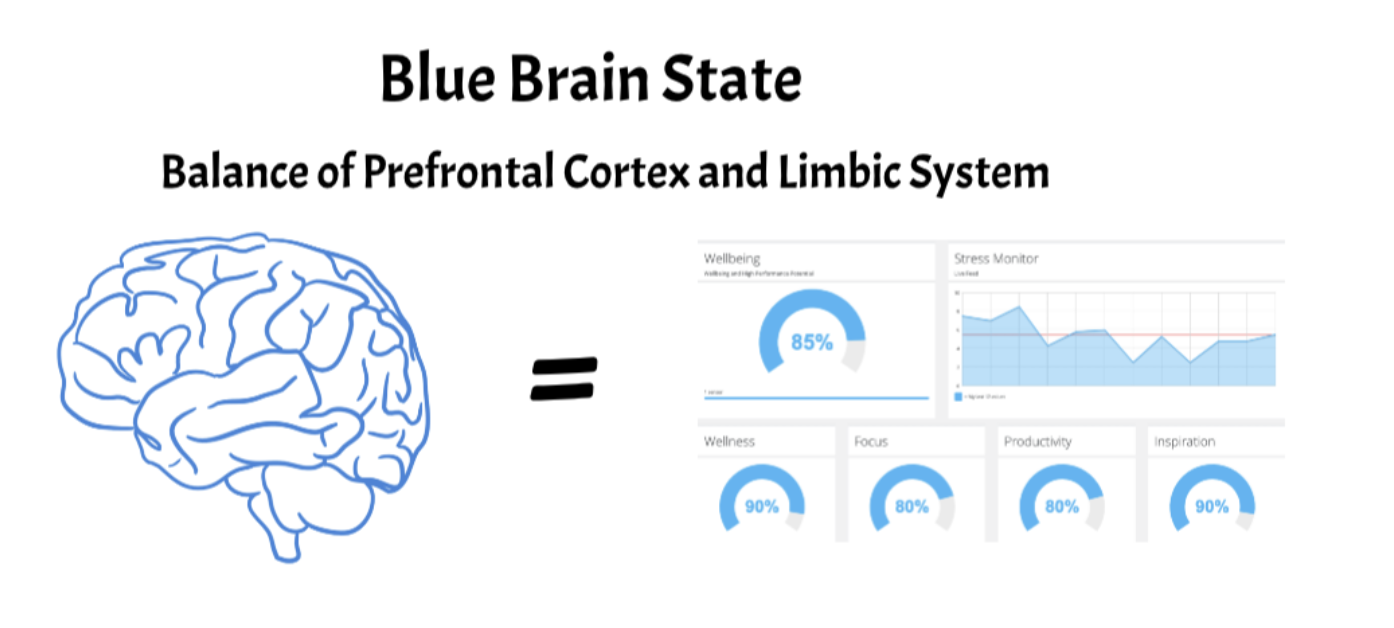
Blue Brain:
- Optimal for health and high performance
- Optimal stress management
- Lowest risk of injury or accident
- State of flow
- Mindful, reflective, empathetic
- Effective problem solving
- Creative thinking
- Balance of logical reasoning with gut instinct and intuition
In Blue Brain State an individual is most likely experiencing emotions of Happiness, Peace, Satisfaction, Joy, Excitement
The next level down in the hierarchy is what I call Green Brain State. The Limbic system is more dominant, and the Prefrontal Cortex is struggling to keep negative emotions in check.
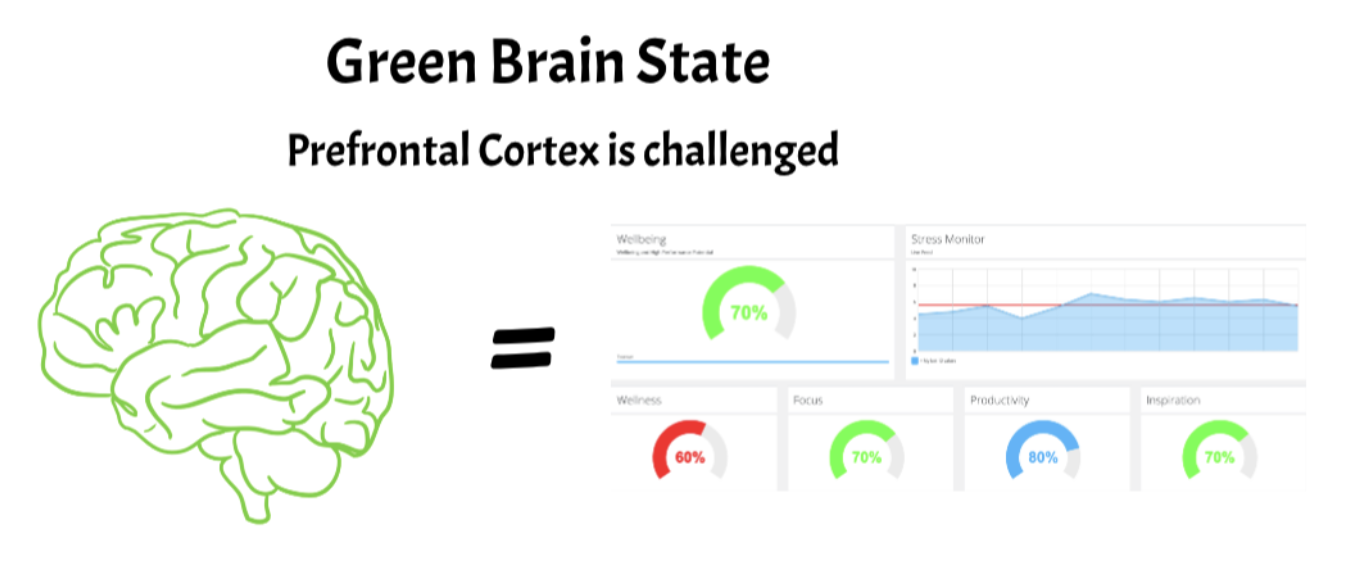
Green Brain:
- PFC is barely managing the emotions of the Limbic System
- Stress is barely managed
- Learning and processing information will take longer
- Sensitive to threats
- Increased risk of accident or injury
- Increased risk to team dynamics and functioning
- Reduced empathy
- Individual feels unvalued
In Green Brain State an individual is most likely experiencing emotions of Discouragement, Sadness, Fatigue, Dissatisfaction and Fear.
The riskiest level of brain functioning is called Red Brain State. This colour denotes the likelihood of the individual being a little hot headed. Mindset and emotions are more negative as they are being driven by the reactionary Brainstem and processed by the Limbic System without the reasoning and clarity of the Prefrontal Cortex.
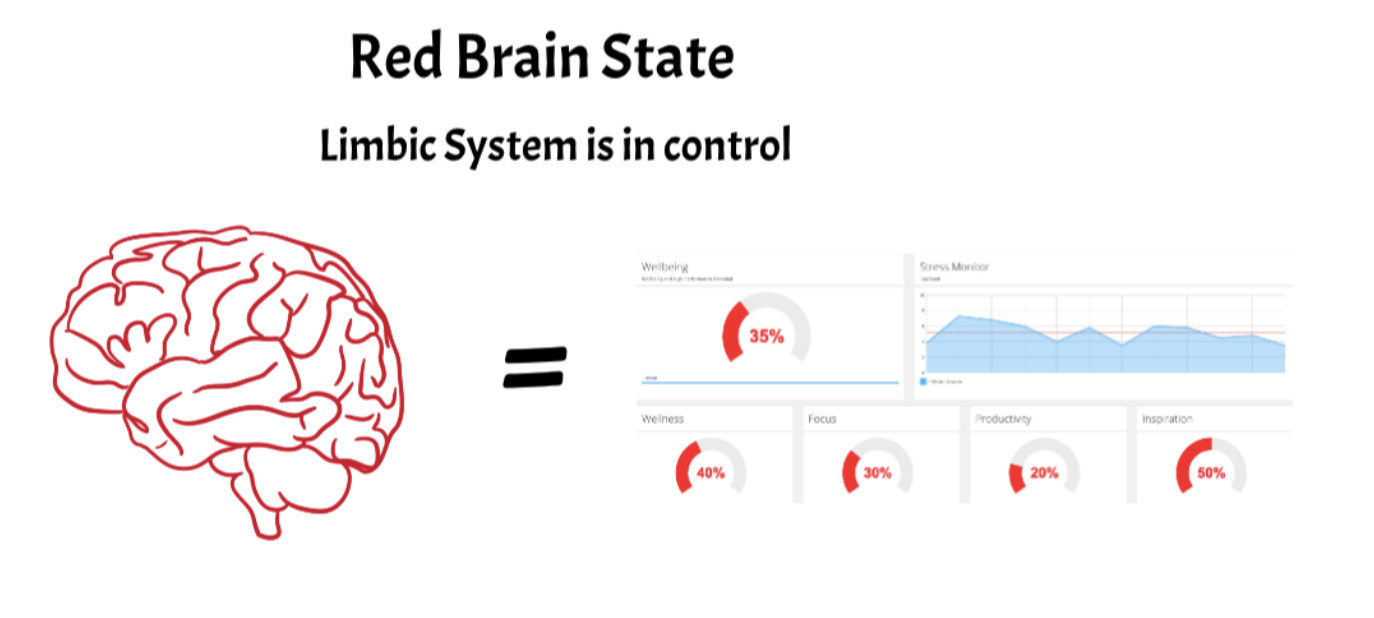
Red Brain:
- Highest risk of injury & accidents
- Highest risk to performance potential and health
- Stress is not being managed
- Defensive and protective
- Reduced focus & productivity
- No empathy
- Highest risk of bullying
- Highest risk to team dynamics and functioning
- Best suited to responding to immediate threat
- Individual feels unsafe
In Red Brain State an individual is most likely to be experiencing negative emotions such as: Anger, Grief, Hurt, Terror.
As well as reinforcing basics of mind management for individuals, the colour coded analytics allow leaders to have real time visibility for the level of risk to health and high performance for their people collectively within teams, departments, workplaces or indeed entire organizations.
For leaders to effectively play their role in maintaining optimal conditions for their people to perform at their best they need to utilize their leadership skills and training to reduce likelihood of exposure to stressors common within teams and workplaces.
Neuroscience shows that to move individuals from Red to Green Brain State requires leaders to give priority to making them feel psychologically safe. Moving individuals and teams from a Green Brain State to a Blue Brain State, from a leadership perspective, requires that priority is given to making them feel highly valued (in addition to feeling safe).
The teambleu software supports leaders by providing a continuous stream of insights for the purpose of sustaining or improving psychological safety for specific teams.
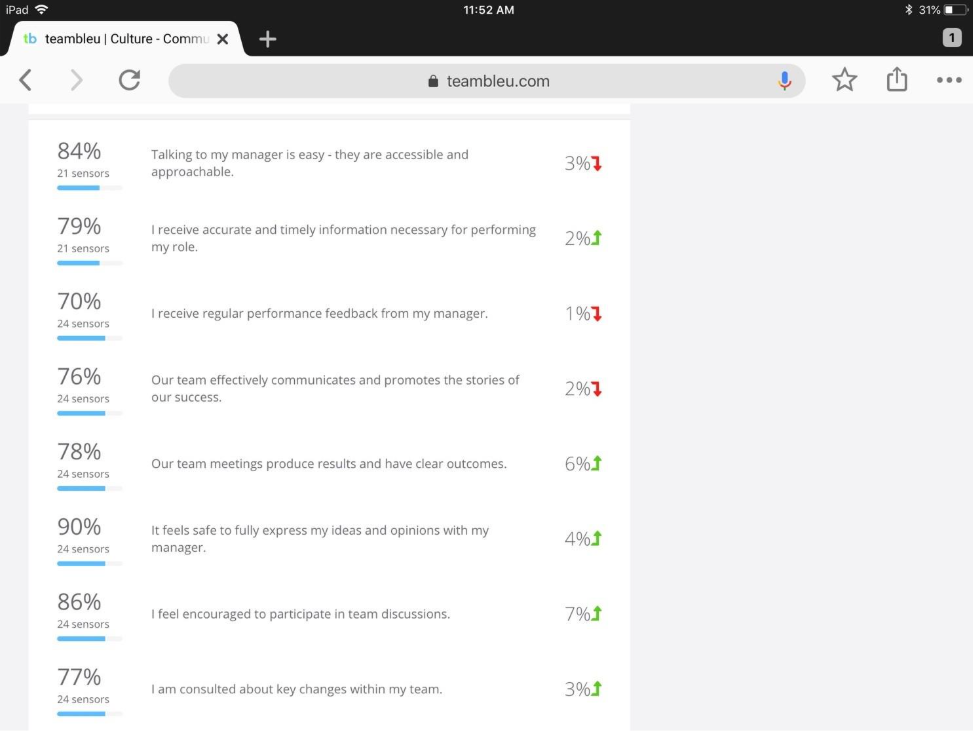
A leader wishing to enhance team performance and protect the health of team members can therefore easily track and identify specific and tangible measures they can influence for shifting levels of psychological safety experienced by all in the team. The team collectively has visibility of this data to ensure all members take responsibility and play their part in maintaining a psychologically safe environment.
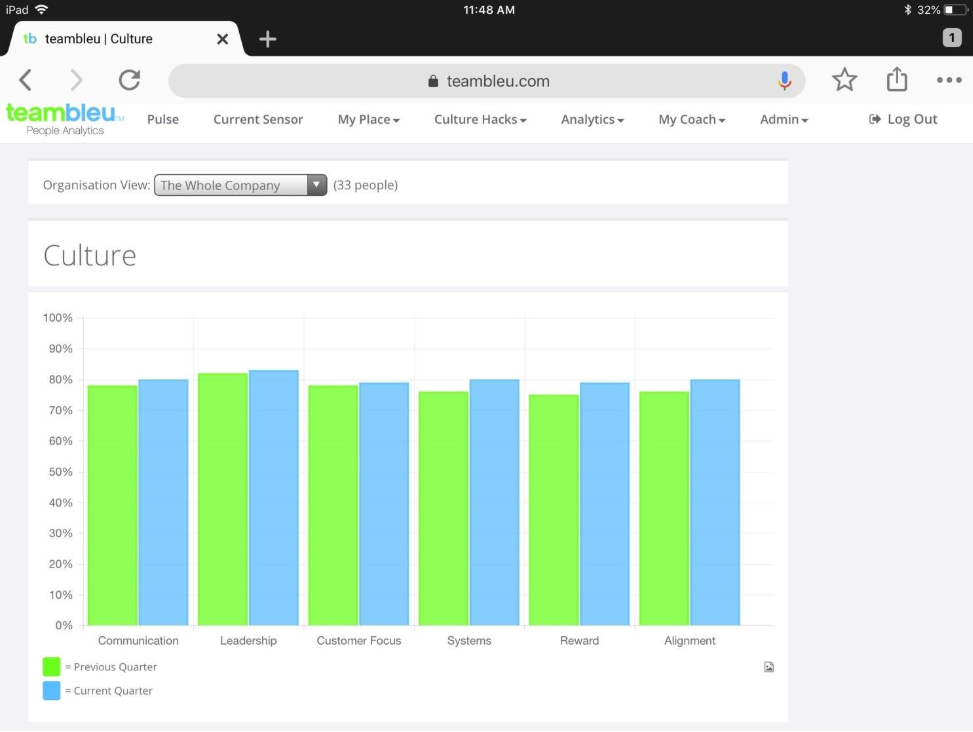
A risk register of psychological stressors is continually updated anonymously by all team members. This ensures that leaders and their teams know precisely what stressors need to be addressed in order to enhance the likelihood of individuals and teams sustaining Blue Brain State as consistently as possible.
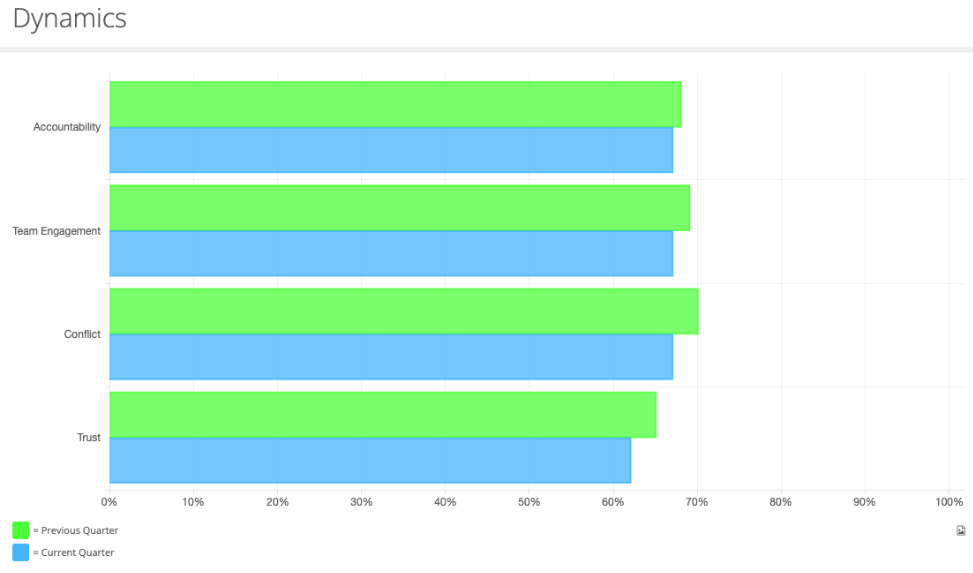
Numerous external influences and lifestyle stressors will impact on the Brain State of individuals and this is for them to build awareness and manage. But leaders always have a special responsibility to ensure they are doing all in their power to optimize conditions for optimal health and high performance within their sphere of influence for the team or workplace.
A team or organizational culture that is lacking alignment with its goals, objectives and strategy will also generate more stress for its members. The enhanced real time visibility for the behaviors that are actually shaping a team culture, as afforded by teambleu software, enables greater alignment. Reducing the likelihood of this stress negatively impacting team dynamics and performance.
The goals and objectives will largely determine the specific cultural elements and behaviors that are most important to be monitored, these particular analytics can therefore be tailored and customized for each team.
This alignment is an all too often neglected aspect of leadership in today’s teams and workplaces. Too often culture is reduced to a buzz word with a lack of genuine understanding that culture is actually grounded in real science with critical importance to performance, health and wellbeing for a team.
Pressure on Leaders
As shown, leaders with their level of influence within a team and its culture, have a critical role to play in proactively managing the threats of chronic pressure and stress for their teams.
But what of the levels of pressure and stress they experience themselves?
The data collected from our unique 4-year real time study revealed that leaders, in particular senior to middle management leaders, were in fact consistently experiencing the highest levels of pressure and stress compared to control groups within their own organizations.
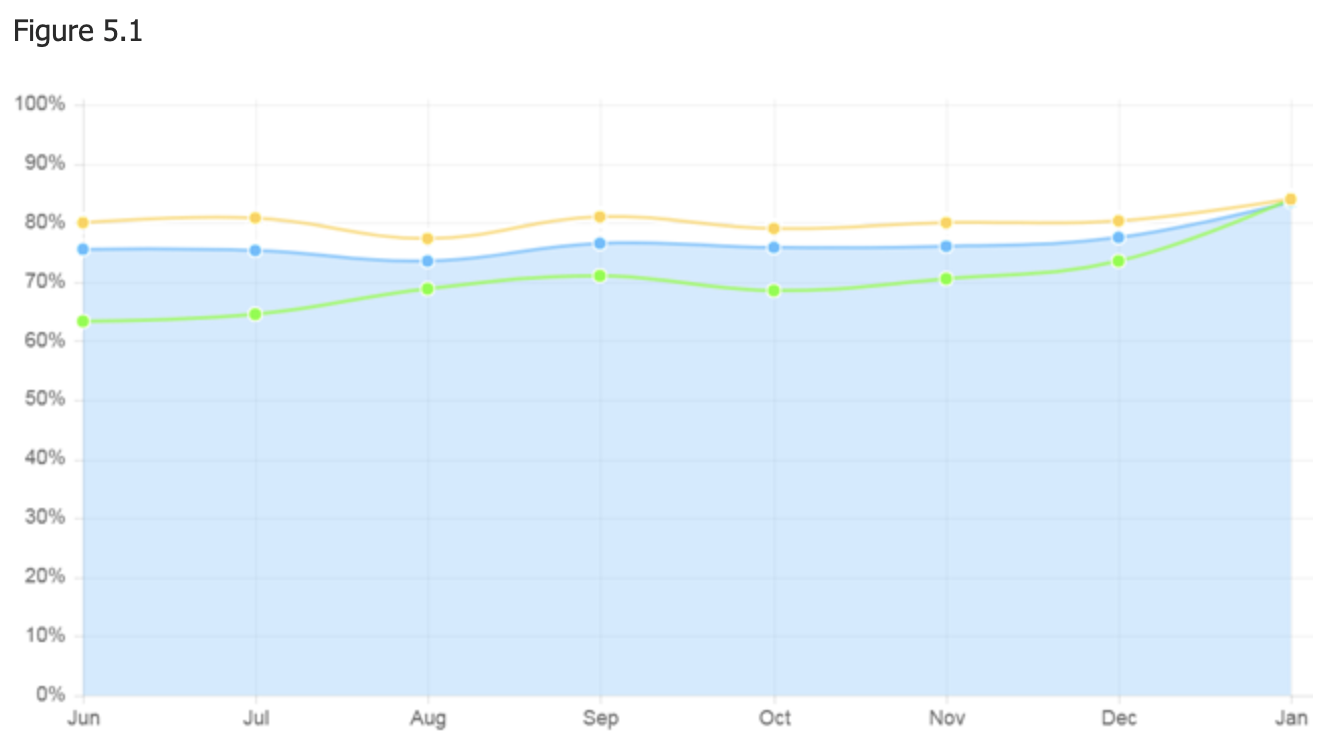
In Figure 5.1 we can see a six month snapshot of a typical and persistent gap between the green line, middle management leaders, and a control group of employees, the yellow line, in diverse nationwide teams who were not in formal leadership positions.
These indicate persistent higher levels of pressure experienced by leaders as illustrated by persistently more negative thinking.
The leaders involved here were at senior to middle management levels.
The pressure is at its most intense for these leaders at the midpoint of the year around June where thought patterns are up to 21% more negative than their baseline.
At this point the most senior executive leaders are reviewing financial metrics for the organization and projecting likely results for the year as a whole. With half a year gone a clear picture is starting to emerge.
Increased awareness at this time and focus on what needs to be done to achieve the critical year end results, the high degree of uncertainty for achieving these results, with all the implications for share prices and executive bonuses, generates pressure within the organization.
Pressure that is most keenly felt by the middle managers for whom the greatest burden falls for achievement of targets through their management of direct reports.
These middle managers were also contending with their own performance incentives and KPI’s which as in many organizations today were aligned with year end results.
The pressure eases as year-end approaches, there is less uncertainty (one of the biggest drivers of psychological pressure) whether the result is looking good or bad. In figure 5.1 we can see the pressure levels for these leaders easing and returning to baseline levels (the blue line) only in January where goals are reset and pressure for achieving results is at its lowest overall.
Interestingly this finding that managers are potentially more susceptible to pressure and stress is aligned with the previously referenced AUT study of NZ workers which found managers were 2.4 times more at risk of burnout.
Another tempting narrative for figure 5.1 might be to explain this trajectory in terms of seasonality.
Could the individuals be suffering from a form of seasonal affective disorder, with more negative thinking in winter months compared to summer? This particular narrative does hold in certain circumstances but isn’t the best explanation for what we’re seeing here. If it were the case then we could rightly expect to see some similar pattern in the control group and we do not. Individuals were certainly able to observe such seasonal patterns in their own data but when aggregated this is largely offset by those who do not by in large experience this phenomenon.
For aggregated data to follow a certain trajectory there has to be a common denominator. In this instance, this commonality is best explained by simultaneous pressure experienced within their shared workplace and organization.
This is highlighted further with appreciation that figure 5.1 is an aggregation of four key indicators with multiple data points from multiple leaders. Each data point in 5.1 represents an average of four data captures from these leaders. Closer examination of the separate indicators illustrates clearly that they all follow a remarkably similar trajectory.
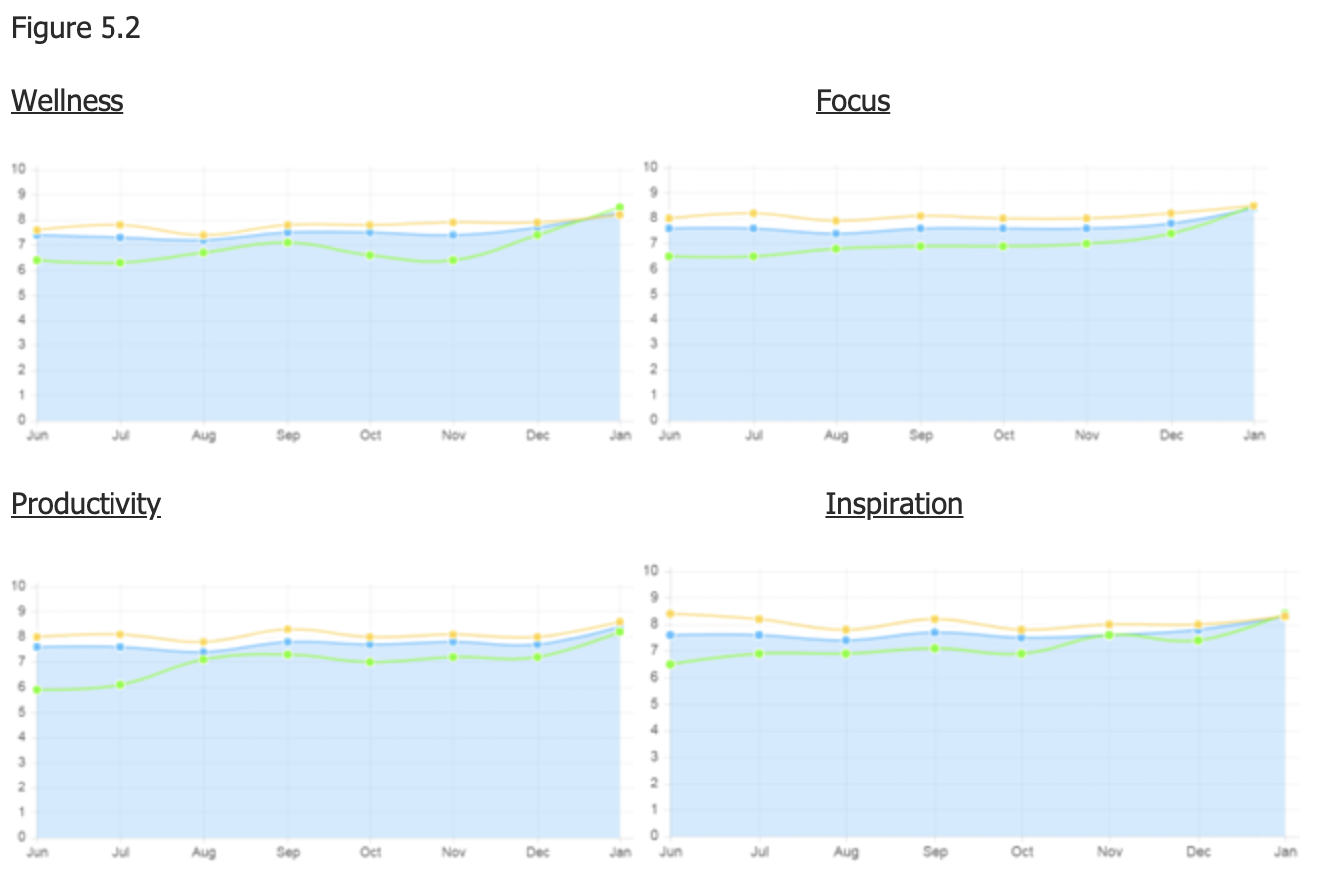
At the precise moment when the senior and middle management leaders were required to be at their very best, apply their full resources of creativity and talent to achieve organizational goals, their performance potential was in fact at its lowest. A direct correlation to the levels of pressure and stress being experienced. These leaders far from being at their best were simultaneously, over multiple indicators and multiple data points, reporting the least satisfaction with their levels of wellness, focus, productivity and inspiration.
The wider implications for how we continue manage our people and organizations is stark and obvious. This particular data set is taken from 2018, a time long before Covid-19, the sustained psychological pressure and stress inflicted on these workers is the direct result of perfectly normal and conventional management practices, systems and structures. What the teambleu software is providing here for the first time is transparency and visibility for the consequences of business as usual and the sustained level of health risks being imposed on employees. Only the teambleu software is capable of identifying these risks, quantifying and qualifying the levels of psychological pressure and stress being experienced.
By misplacing our focus on results, rather than the fundamentals of performance, we are time and again unwittingly limiting the ability of our teams to achieve their objectives.
This is made clearer still when we examine this data in view of the common attributes of a pressure situation as outlined by Hendrie Weisinger and J.P. Pawliw-Fry in their New York Times best seller “How to Perform Under Pressure – The science of Doing Your Best When It Matters Most”
Step back and see the neurological and psychological dynamics of a pressure situation: The attributes of a pressure moment – importance, uncertainty, responsibility to others and feeling judged – are all factors that have potential to stimulate feelings of fear, anxiety, failure, embarrassment and stress. These are powerful psychological and physiological forces that can be helpful in the right context, but not in a pressure situation. While they were often helpful to your ancestors in pressure moments when the threats were more physical in nature, today these primal pressure reactions if unskillfully managed, have the potential to prevent you from doing your best by limiting your brain’s capacity to effectively respond.
Why did our research data show specifically that it was senior to middle management leaders that were most impacted by pressure and stress? Why not those on the frontline of the organization, customer facing, or even the executive leaders?
Our research and data showed time and again that individuals are experiencing very long periods of sustained high pressure. This one example alone illustrates leaders who were experiencing high levels of pressure with below baseline thought patterns and repetitively more negative thinking for half of the year. With increasing knowledge of the risks to health, let alone performance, for such long-term exposure to chronic pressure, the implications for how we are currently failing to fulfil our duty of care to people within teams and workplaces are enormous.
Standard thinking is that setting kpi’s and performance targets is a proper and effective way to align individuals with organizational goals and achieve performance. Science is showing and telling us otherwise. This data shows us clearly the real impact and risks to health and performance.
The individuals were all experiencing myriad pressures in other aspects of their lives yet distinct patterns emerge that fit a clear narrative of what we know is occurring in the workplace. This illustrates the dominance of workplace versus personal stressors.
Pressure and stress is unavoidable to a degree that doesn’t mean we need to add to it unnecessarily. The science shows us that to optimize performance and health we need to optimize pressure and stress, that means minimizing it where possible and learning how to best manage it for teams and for individuals. None of which is possible without consistent and scientific measurement of psychological pressure and stress as afforded by the teambleu software.

Dominic Petrus
CEO & Co-founder of teambleu.com


Leave a Reply